
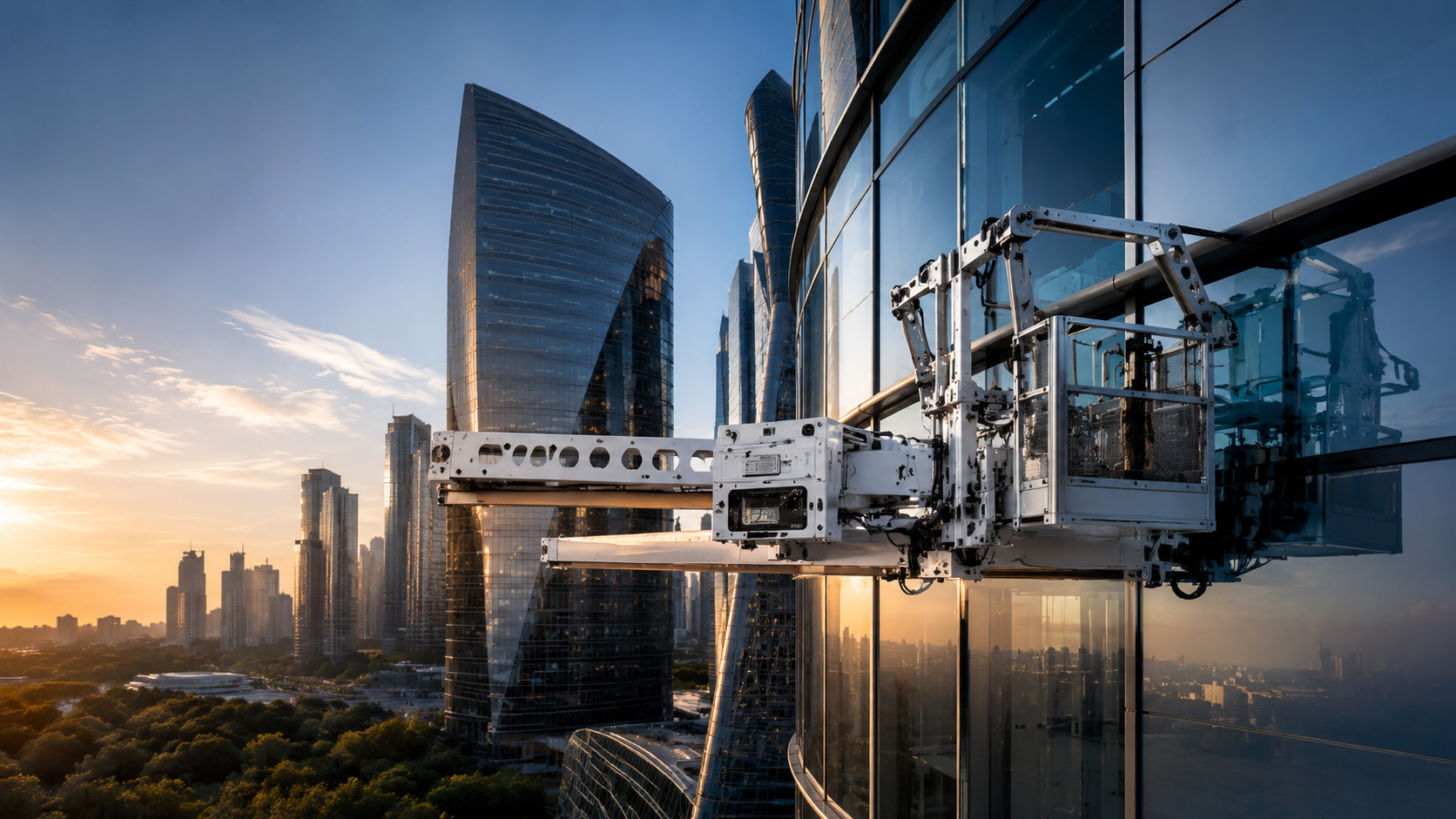
Maintenance Strategy
Feasibility, environmental behaviour, intervention frequency, operational priorities and lifecycle cost optimization.
Capabilities organized around the maintenance problem, the engineering method and the result — never around equipment alone.
Feasibility, environmental behaviour, intervention frequency, operational priorities and lifecycle cost optimization.
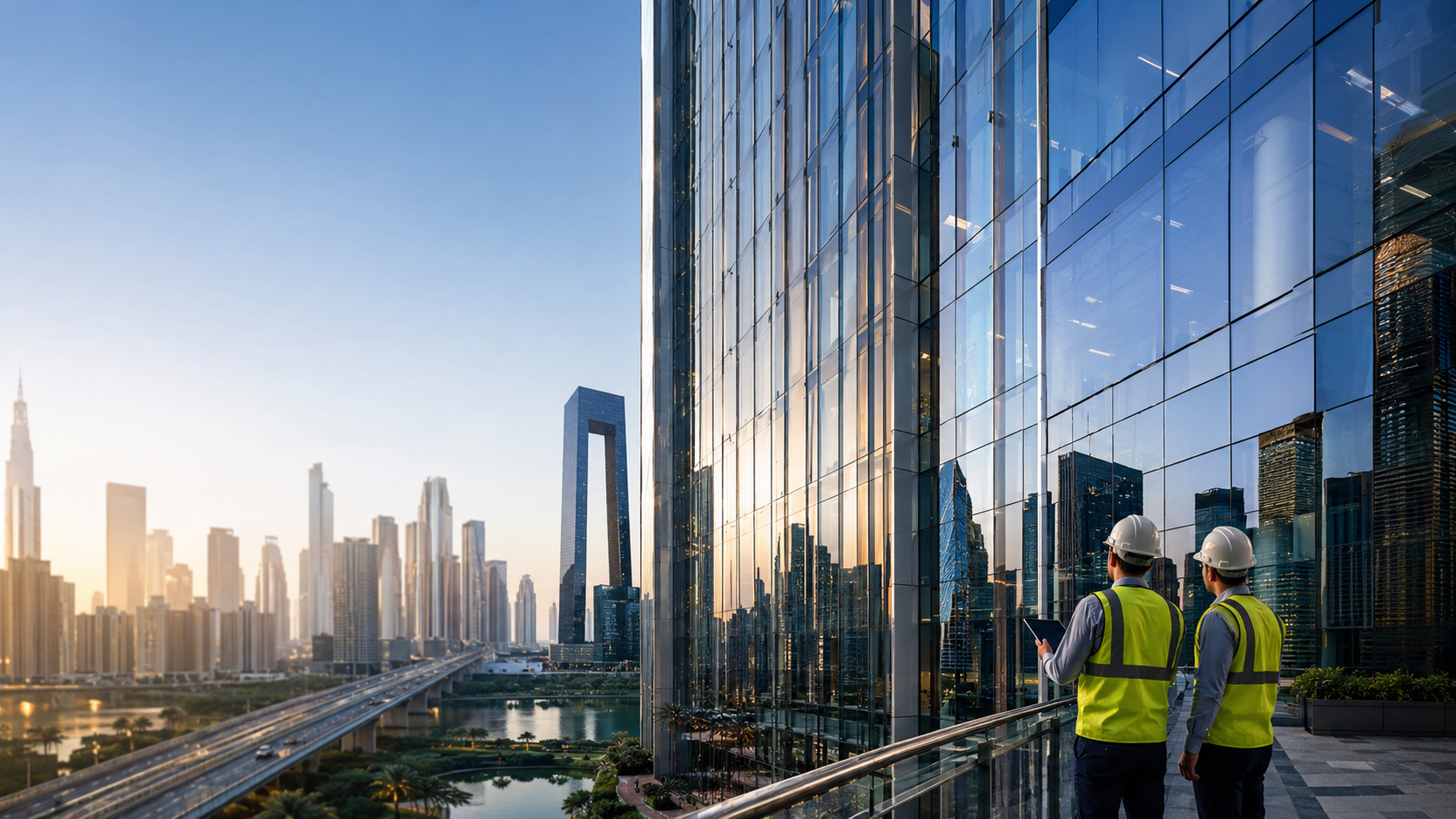
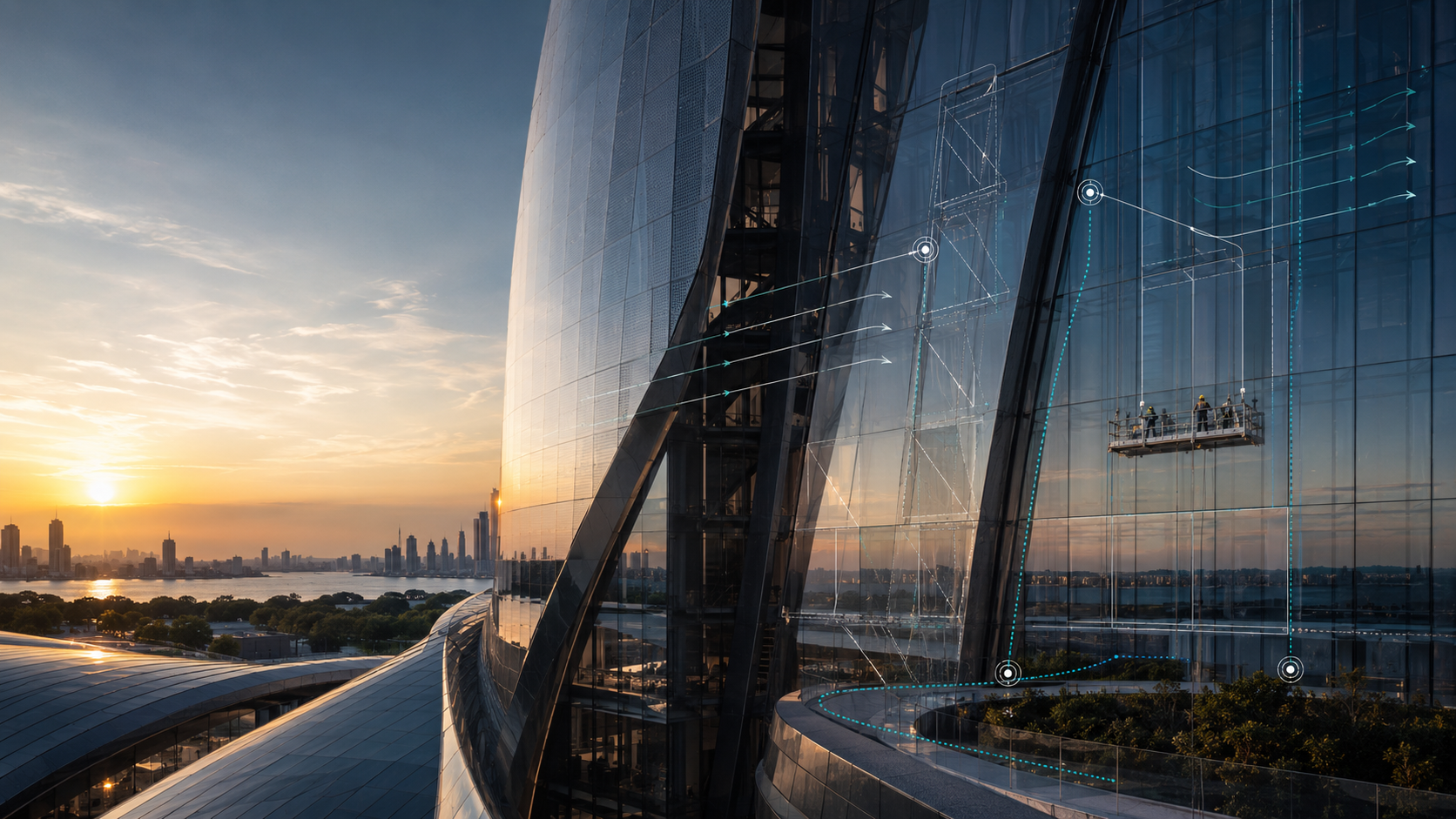
Lines of descent, anchor layouts, connection points, operator progression, rescue logic and structural coordination.
Bespoke lifting systems, manipulators, prototypes, FEA and testing when standard solutions are inadequate.
Movement studies, lifting constraints, risk reduction and execution planning for large glazed elements.
Rope access treated as a design discipline and selected when it is the best solution for the building and operation.
Manuals, digital records, training, inspection planning and long-term operating support.
The access system is designed around the operation: where the operator starts, progresses, works, changes direction and is recovered in an emergency.
Rope access is neither promoted as a universal answer nor reduced to an operational technique.
Every building requires a specific assessment based on geometry, frequency, operational need, risk, architecture and lifecycle cost.
Operational need → Sketch → CAD → FEA → Construction drawings → Prototype → Testing → Certification support.
Every component is developed around movement, interfaces, loads, operator use, rescue conditions and long-term preservation.
Discuss a Technical ChallengeEvery system is developed around the operation it must enable, integrating movement, interfaces, loads and building-specific constraints.
FLY-LIFTERS, FLY-3POD and FLY-CAGE for glass replacement, panel movement, lifting at height and complex roofs.
FLY-CARTER, FLY-SHELL, FLY-CLAMP, FLY-STAND and dedicated accessories.
Substructures, supports, bases, provisions and fixing elements coordinated with the building.
Temporary guidance and movement systems introduced only when operations require them.
Precision positioning devices for glass and panels in constrained or complex intervention scenarios.
Every solution begins with the maintenance operation, the architecture and the lifecycle requirements of the asset.